
15 Inspiring UPSC Success Stories That Will Motivate Every Aspirant (2026)
Introduction
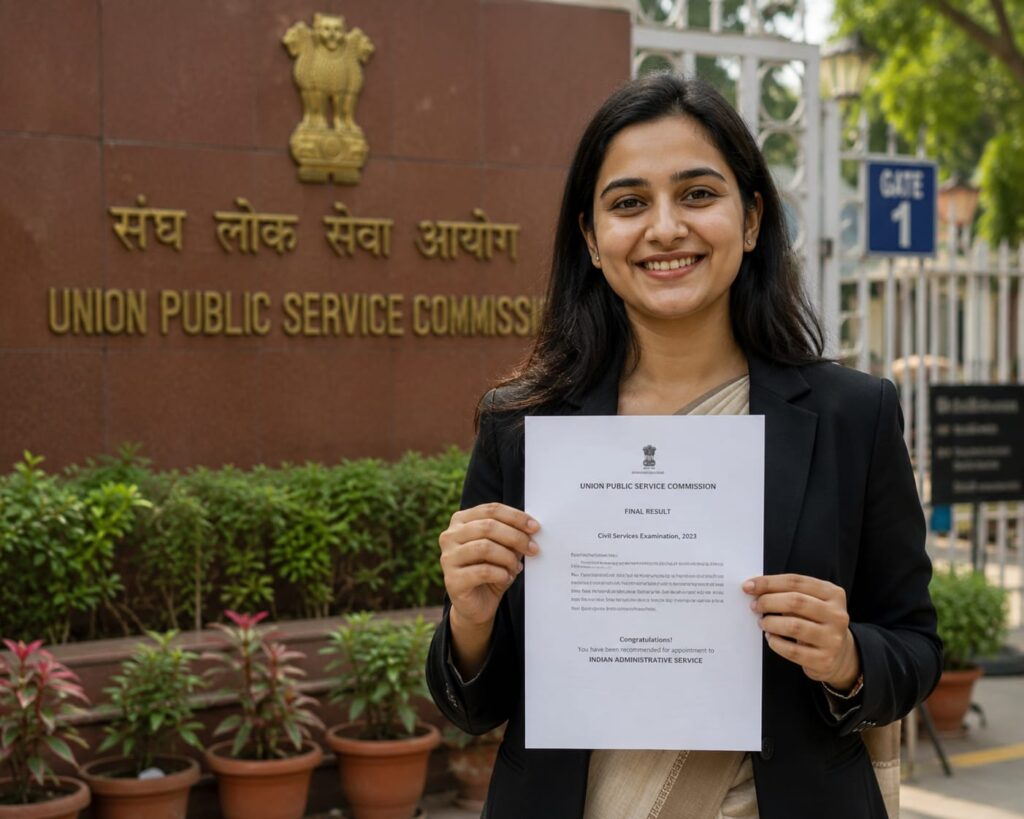
Every year, lakhs of aspirants appear for the UPSC Civil Services Examination with the dream of becoming an IAS, IPS, IFS, or other civil servants. However, only a small percentage of candidates successfully clear all three stages—Prelims, Mains, and the Personality Test. The journey is long, challenging, and filled with obstacles such as self-doubt, failures, and intense competition. This is why reading UPSC Success Stories can be incredibly motivating for every aspirant.
UPSC Success Stories are more than just inspiring achievements. They reveal the dedication, discipline, smart study strategies, and consistent efforts that helped toppers achieve their goals. These stories prove that success is not determined by luck or background but by perseverance, proper planning, and continuous learning. Many successful candidates have overcome financial difficulties, multiple failures, and personal challenges before securing a top rank in the UPSC examination.
In this article, we will explore some of the most inspiring UPSC Success Stories, the common habits of successful candidates, the lessons you can apply to your own preparation, and practical strategies that can help you stay motivated throughout your UPSC journey. Whether you are a beginner or a serious aspirant preparing for the Civil Services Examination, these real-life success stories will encourage you to remain focused, improve your preparation, and believe that your dream of becoming a civil servant is achievable with the right mindset and consistent effort.
This comprehensive guide will also highlight the key qualities shared by UPSC toppers, common mistakes to avoid, and practical tips that can help you move one step closer to success in the UPSC Civil Services Examination.
Why UPSC Success Stories Inspire Aspirants
Preparing for the UPSC Civil Services Examination is a long and demanding journey that tests a candidate’s patience, discipline, and determination. Many aspirants face failures, self-doubt, and stress before achieving success. This is where UPSC Success Stories play an important role. They inspire candidates by proving that success is possible through consistent hard work, smart planning, and a positive mindset.
One of the biggest reasons aspirants read UPSC Success Stories is to learn from the experiences of toppers. These stories reveal how successful candidates managed their time, prepared for different subjects, handled failures, and stayed motivated during difficult phases. Instead of relying on shortcuts, they focused on regular revision, answer writing, mock tests, and continuous self-improvement.
Another reason these success stories are inspiring is that many UPSC toppers come from ordinary backgrounds. Some prepared without coaching, while others balanced jobs or financial challenges along with their studies. Their achievements prove that dedication and perseverance matter more than background or resources. This gives confidence to thousands of aspirants who may be facing similar struggles.
Reading UPSC Success Stories also helps candidates develop the right mindset. They understand that failure is not the end of the journey but an opportunity to improve. Every topper has a unique strategy, but they all share common qualities such as discipline, consistency, patience, and a strong desire to serve the nation.
Whether you are just beginning your preparation or are preparing for another attempt, UPSC Success Stories can motivate you to remain focused on your goals. By learning from the journeys of successful candidates, you can improve your preparation strategy, avoid common mistakes, and move one step closer to achieving your dream of becoming a civil servant.
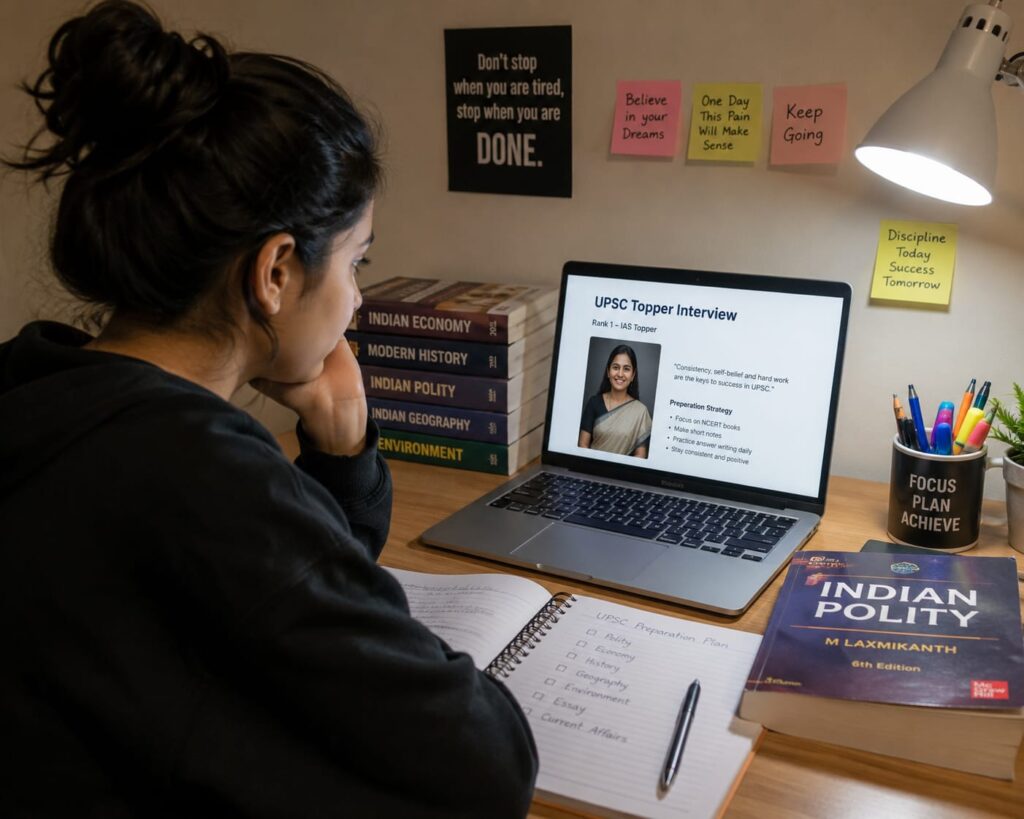
10 Common Habits of UPSC Toppers
Every UPSC topper has a unique preparation strategy, but many successful candidates share similar habits that help them stay disciplined and consistent throughout their journey. Building these habits can significantly improve your chances of clearing the Civil Services Examination.
1.Follow a Fixed Daily Routine
UPSC toppers usually prepare according to a well-planned timetable. They allocate separate time slots for studying, revision, answer writing, current affairs, and relaxation. A consistent routine improves productivity and reduces unnecessary stress.
2.Study NCERT and Standard Books Thoroughly
Instead of collecting dozens of books, toppers focus on mastering a few reliable resources. They revise NCERT textbooks and standard reference books multiple times to strengthen their concepts.
3.Revise Regularly
Revision is one of the biggest secrets behind UPSC success. Most toppers revise every week and every month to retain information for the long term. Without revision, even the best preparation becomes ineffective.
4.Read Newspapers Every Day
Daily newspaper reading helps aspirants stay updated with national and international events. Toppers also make short notes of important current affairs for quick revision before the examination.
5.Practice Answer Writing
Writing practice improves speed, presentation, and analytical thinking. UPSC toppers regularly solve previous year questions and write mock answers to improve their performance in the Mains examination.
6.Solve Mock Tests Frequently
Mock tests help identify strengths and weaknesses. Toppers analyze every test carefully, learn from mistakes, and improve their strategy before the actual examination.
7.Stay Healthy and Active
Good physical and mental health plays an important role in long-term preparation. Successful candidates maintain a balanced diet, get enough sleep, exercise regularly, and take short breaks to stay fresh and focused.
8.Avoid Social Media Distractions
Most UPSC toppers limit unnecessary screen time. They avoid excessive use of social media and entertainment apps so they can focus entirely on their preparation goals.
9.Stay Positive During Failures
Failures and setbacks are common during UPSC preparation. Instead of giving up, toppers treat every mistake as a learning opportunity and continue improving with determination and confidence.
10.Believe in Consistency Over Perfection
UPSC is not won by studying 16 hours for a few days. It is won through consistent effort over many months. Even studying 6–8 productive hours daily with complete focus can produce excellent results.
By adopting these habits, any serious UPSC aspirant can build a strong foundation for success. Discipline, smart planning, regular revision, and a positive mindset are the qualities that separate successful candidates from the rest.
Famous UPSC Success Stories
Tina Dabi
UPSC CSE 2015 (AIR 1)
Tina Dabi became one of the youngest candidates to secure All India Rank 1 in the UPSC Civil Services Examination. She completed her graduation in Political Science from Lady Shri Ram College, Delhi University. Her disciplined study routine, consistent answer writing practice, and strong understanding of current affairs made her preparation highly effective. She emphasized multiple revisions instead of reading too many books and encouraged aspirants to focus on conceptual clarity.
Ishita Kishore
UPSC CSE 2022 (AIR 1)
Ishita Kishore graduated in Economics from Shri Ram College of Commerce (SRCC), Delhi University. Before clearing UPSC, she worked with Ernst & Young (EY). She stressed the importance of maintaining consistency, practicing mock tests, revising regularly, and staying calm throughout the preparation journey. Her success proved that dedication and proper planning are more important than studying for extremely long hours.
Shurti Sharma
UPSC CSE 2021 (AIR 1)
Shruti Sharma completed her graduation from St. Stephen’s College, Delhi University, and later pursued higher studies at Jawaharlal Nehru University (JNU). She highlighted the importance of newspaper reading, answer writing practice, and maintaining confidence during preparation. According to her, understanding concepts deeply and revising frequently are essential for success in UPSC.
Kanishak Kataria
UPSC CSE 2018 (AIR 1)
Kanishak Kataria is a B.Tech graduate from IIT Bombay in Computer Science. Before joining the civil services, he worked as a software engineer. He balanced technical knowledge with General Studies preparation through disciplined time management. His preparation strategy focused on solving previous year papers, taking mock tests, and continuously improving weak areas.
Roman Saini
UPSC CSE 2013 (AIR 18)
Roman Saini is a doctor who graduated from AIIMS, New Delhi. He cleared the UPSC Civil Services Examination at a young age and joined the Indian Administrative Service (IAS). Later, he resigned from the service and co-founded Unacademy, one of India’s largest online learning platforms. Roman often emphasizes smart study methods, consistency, and self-discipline over simply studying for long hours.
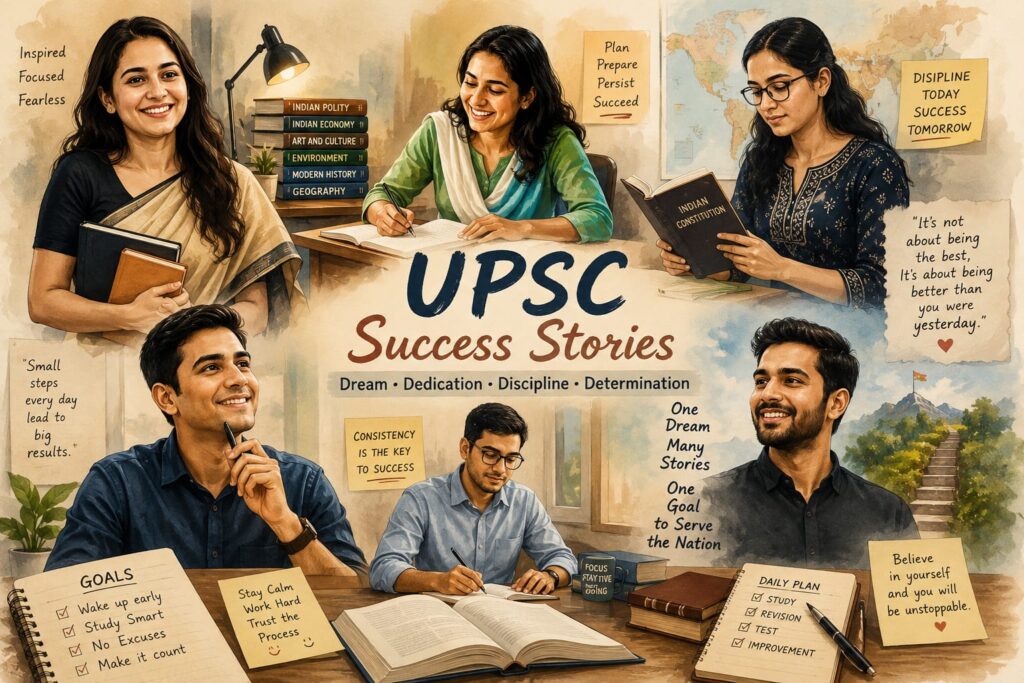
Lessons You Can Learn from UPSC Success Stories
Every UPSC success story teaches an important lesson that goes beyond simply clearing an examination. While every topper follows a different strategy, there are certain principles that remain common among almost all successful candidates. Learning these lessons can help every aspirant prepare more effectively and stay motivated throughout the journey.
The first lesson is consistency. UPSC preparation is a marathon, not a sprint. Most toppers achieve success by studying regularly over many months instead of relying on last-minute preparation. Even six to eight focused study hours every day can produce excellent results when maintained consistently.
The second lesson is the importance of smart planning. Successful candidates create realistic study schedules, divide the syllabus into smaller targets, and revise regularly. They focus on completing quality study rather than simply spending long hours at the study table.
Another valuable lesson is learning from failures. Many UPSC toppers did not clear the examination on their first attempt. Instead of giving up, they analyzed their mistakes, improved their weak areas, and returned stronger in the next attempt. This positive attitude plays a major role in long-term success.
UPSC success stories also highlight the importance of answer writing practice, mock tests, newspaper reading, and current affairs preparation. These habits improve analytical thinking, writing skills, and confidence during both the Mains Examination and the Personality Test.
Finally, every topper emphasizes self-belief and patience. There will be difficult days, low scores, and moments of self-doubt. However, candidates who remain disciplined, stay motivated, and continue improving gradually are more likely to achieve their goals.
The biggest lesson from UPSC success stories is that success is not determined by luck or background. It is built through dedication, consistency, continuous learning, and the courage to keep moving forward despite challenges. Every aspirant has the potential to succeed with the right mindset, proper strategy, and unwavering determination.

Common Mistakes to Avoid
Many UPSC aspirants work hard but still struggle because of a few common mistakes. Avoiding these errors can make your preparation more effective and increase your chances of success.
One of the biggest mistakes is collecting too many study materials. Instead of reading multiple books for the same subject, stick to NCERTs and a few standard reference books. Revising the same material multiple times is far more beneficial than constantly switching resources.
Another common mistake is ignoring revision. Without regular revision, even well-studied topics are easily forgotten. Create a weekly and monthly revision schedule to retain important concepts.
Many candidates also neglect answer writing practice and mock tests. These are essential for improving writing speed, presentation skills, and time management for the Mains Examination.
Spending excessive time on social media and unnecessary distractions can reduce productivity. Limit screen time and focus on your daily study targets.
Some aspirants compare themselves with others, which often leads to stress and self-doubt. Every candidate has a unique learning pace, so focus on your own progress instead of competing with others.
Finally, avoid studying for long hours without proper rest. A balanced routine that includes adequate sleep, healthy food, hydration, and short breaks helps maintain concentration and prevents burnout.
By avoiding these common mistakes and staying disciplined, you can prepare more efficiently and move one step closer to achieving your dream of becoming a civil servant.

Frequently Asked Questions (FAQs)
*Can anyone crack UPSC?
*How many hours do toppers study?
*Which UPSC success story is the most inspiring?
*Is coaching necessary?
*How many attempts are allowed?
Conclusion
Every UPSC success story proves that achieving success in the Civil Services Examination is not about luck, shortcuts, or extraordinary talent. It is the result of consistent effort, smart planning, discipline, and the determination to keep moving forward despite challenges. Every successful IAS, IPS, or IFS officer once started as an ordinary aspirant with a dream of serving the nation.
The journeys of toppers such as Tina Dabi, Ishita Kishore, Shruti Sharma, Kanishak Kataria, and Roman Saini show that there is no single formula for success. Each candidate followed a different strategy, but they all shared common qualities like hard work, regular revision, answer writing practice, effective time management, and a positive mindset. Their experiences remind us that setbacks and failures are part of the preparation process and should be viewed as opportunities to learn and improve.
If you are preparing for the UPSC Civil Services Examination, focus on building a strong foundation, staying consistent with your study schedule, and revising your subjects regularly. Avoid comparing your journey with others, and concentrate on improving yourself every day. Small daily improvements can lead to remarkable results over time.
Remember, every topper was once a beginner who refused to give up. Stay patient, believe in your abilities, and keep working towards your goal with dedication and confidence. With the right strategy, continuous learning, and unwavering determination, you too can write your own UPSC success story and achieve your dream of serving the nation.