
UPSC Time Management Tips .

Introduction
Time management is one of the biggest reasons behind UPSC success. Every aspirant gets the same 24 hours, but toppers know how to use them effectively. If you learn to manage your time properly, you can complete the syllabus, revise regularly, attempt mock tests, and stay stress-free throughout your UPSC preparation.
Why Time Management is Important for UPSC Preparation
Time management is one of the biggest factors behind UPSC success. A well-planned study routine helps you complete the syllabus on time, revise regularly, and reduce exam stress. It also allows you to balance current affairs, answer writing, mock tests, and revision without feeling overwhelmed.
15 Best UPSC Time Management Tips for Guaranteed Success in 2026
1.Create a Realistic Study Timetable
Create a practical study schedule that includes General Studies, Current Affairs, Optional Subject, Revision, and Mock Tests. Avoid unrealistic plans because they are difficult to follow consistently.
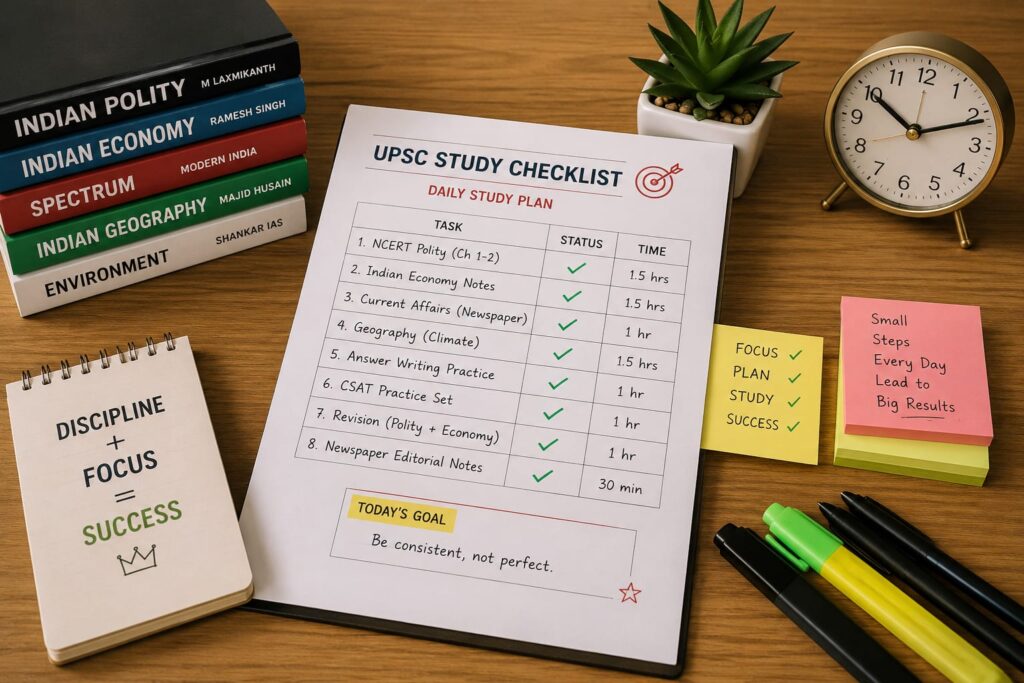
2.Set Daily and Weekly Goals
Divide your syllabus into small targets. Completing daily and weekly goals keeps you motivated and makes the preparation process more manageable.
3.Study Difficult Subject First
Study the toughest subjects during your most productive hours. Your brain absorbs difficult concepts more effectively when your energy level is high.
4.Follow the Pomodoro Technique
Study for 50 minutes with full concentration, then take a 10-minute break. This improves focus and reduces mental fatigue.

5. Limit Mobile Phone Usage
Keep your phone away while studying. Turning off notifications helps you avoid distractions and complete more work in less time.
6. Revise Every Day
Daily revision strengthens memory and helps you retain important concepts for a longer period.
7. Practice Mock Tests
Mock tests improve speed, accuracy, and confidence before the actual examination.
UPSC Syllabus 2027: Complete Prelims & Mains Syllabus
8. Solve Previous Year Papers
Previous year question papers help you understand the exam pattern and improve your preparation strategy.
9. Focus on Quality Study
Studying with complete concentration for six productive hours is more effective than spending twelve distracted hours.
10.Take a Short Break
Short breaks improve concentration and reduce stress during long study sessions.

11.Maintain a Healthy Lifestyle
Eat healthy food, exercise regularly, and get enough sleep to improve productivity.
12.Track Your Progress
Review your daily and weekly achievements to identify areas for improvement.
13.Avoid Too Many Study Resources
Stick to standard books and revise them multiple times instead of collecting too many resources.
14. Stay Consistent
Consistency is the key to clearing the UPSC exam. Even small daily efforts lead to big results over time.
15.Review Your Study Plan Regularly
Modify your timetable whenever required and keep improving your preparation strategy.
Frequently Asked Questions (FAQs)
How many hours should I study for UPSC daily?
Most aspirants study between 6 and 8 focused hours, but consistency and quality matter more than the number of hours.
Is time management important for UPSC?
Yes. Effective time management helps you complete the syllabus, revise regularly, and perform better in both Prelims and Mains.
Which is the best time management technique for UPSC?
The Pomodoro Technique, daily planning, weekly goals, and regular revision are among the most effective methods.
Conclusion
Time management is one of the most valuable skills for every UPSC aspirant. By following these UPSC Time Management Tips, you can improve productivity, complete your syllabus on time, reduce stress, and stay consistent throughout your preparation. Smart planning, regular revision, and disciplined execution will bring you closer to your dream of becoming an IAS, IPS, or IFS officer.
UPSC Preparation Strategy 2027: Step-by-Step Guide to Crack UPSC Exam